We sat down with Doug Reymore, Planning & Development Manager at Jewett Construction, to discuss what business owners should know before starting their next commercial construction project.
While many people think a construction project begins when equipment arrives on site, the reality is that the most important decisions are often made months beforehand. From evaluating potential sites and understanding permitting requirements to establishing realistic budgets and timelines, the preconstruction phase lays the foundation for a successful project.
With years of experience guiding clients through planning and development, Doug has helped businesses navigate the complexities of commercial construction before the first shovel ever hits the ground. In this Q&A, he shares practical insights, common misconceptions, and advice that can help owners make informed decisions and avoid costly surprises.
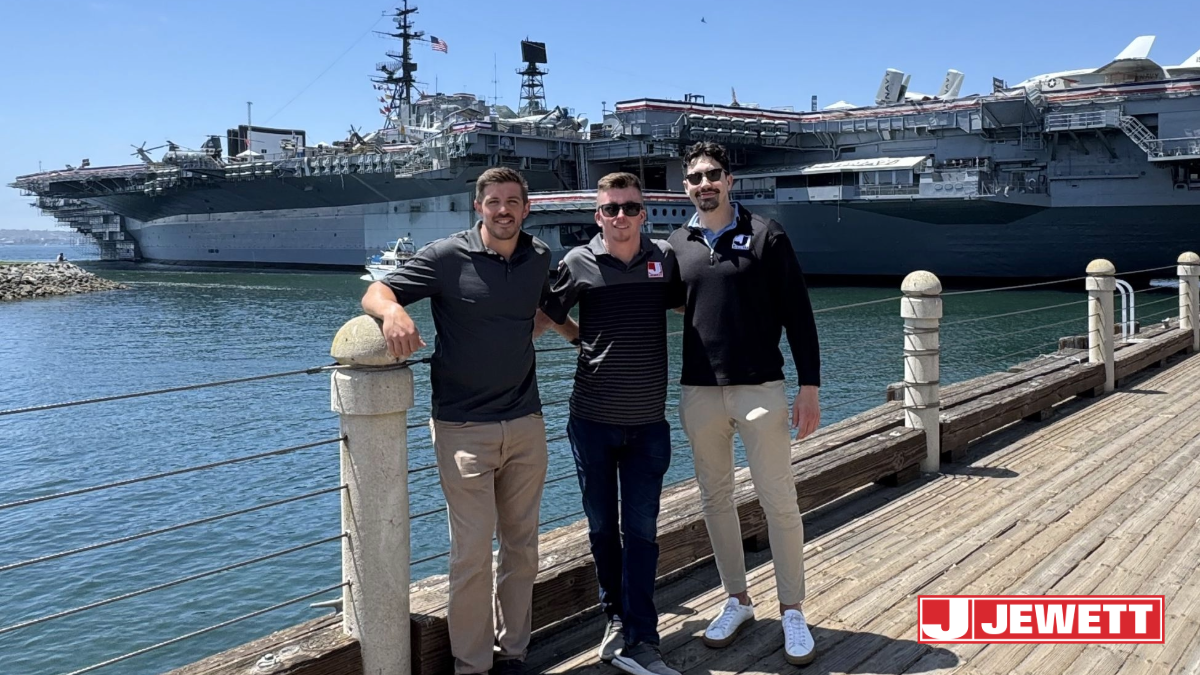
Pictured above: Part of the Jewett Preconstruction Team - Jared Nicklas, Doug Reymore, and Collin Murphy.
What You'll Learn
- What happens during the preconstruction phase
- Common mistakes owners make before purchasing land
- How early planning saves time and money
- Why planning board meetings are so important
- The one piece of advice every owner should know before building
What Happens Before Construction Actually Begins?
Doug:
Many people think construction starts when equipment shows up on site, but some of the most important work happens months before that.
At its core, preconstruction is about defining the project scope, establishing a realistic budget, and minimizing risk before construction begins. Every project starts somewhere, whether that's a simple sketch on a napkin or an idea with no defined budget. From there, we work through budgeting, design development, permitting, and coordination until we have a complete set of construction documents and a finalized construction contract.
Depending on the project and the owner's decision-making process, that phase can take anywhere from four to six months to over a year.
Why Preconstruction Takes Longer Than Many Owners Expect
One of the biggest surprises for owners is realizing just how many decisions need to be made before construction starts. Building today is far more complex than it was 20 years ago. Codes are more stringent, design requirements are more involved, permitting takes longer, and construction costs have increased.
Years ago, getting a permit might have meant stopping by the building department and having a quick conversation with the inspector. Today, permitting can take months. That's where we help guide owners through the process and avoid unnecessary delays.
What Are the Biggest Mistakes Owners Make Before Buying Land?
Doug:
The biggest mistake is assuming they can save money by skipping or minimizing due diligence.
We often hear owners say they don't want to spend money evaluating a property because they're worried the deal might not happen. In reality, investing a relatively small amount upfront can save hundreds of thousands of dollars later.
Why Due Diligence Matters
Especially here in New England, there aren't many "easy" sites left to build on. Most available properties have some type of challenge, including:
- Wetlands
- Poor soils or ledge
- Utility limitations
- Zoning restrictions
- Environmental concerns
- Protected species
- Opposition from neighboring property owners
These issues are much easier—and far less expensive—to identify during the due diligence period than after significant investments have already been made in design.
Our goal is to help owners understand both the site risks and the potential construction costs at the same time. That gives them the confidence to move forward—or walk away—before making a costly mistake.
Sometimes the best advice is simply recognizing what you don't know and bringing experienced professionals in to evaluate the property.
How Can Early Planning Save Time and Money?
Doug:
Early planning is really about reducing uncertainty.
During the due diligence period, owners typically have a property under agreement with only a small deposit at risk. That's the ideal time to evaluate utilities, wetlands, permitting requirements, zoning, access, neighboring properties, and other potential obstacles.
Preventing Costly Delays
We've seen projects delayed for months because of an unhappy abutter who challenged approvals. That can lead to attorney fees, redesign costs, additional engineering, and significant schedule delays.
Building Stronger Financing Packages
When we get involved early, we can also develop realistic budgets that help owners secure financing with greater confidence.
Lenders want to see well-developed budgets, preliminary drawings, renderings, and a clear project plan. We help assemble those funding packages so owners can approach banks with confidence. That preparation can improve financing opportunities and make it easier to secure investors or tenants.
Ultimately, preconstruction is about identifying risks early enough that they become manageable instead of expensive surprises. Every month a commercial building sits unfinished is another month an owner isn't generating revenue.
Why Do Planning Board Meetings Matter?
Doug:
Planning board meetings are one of the most important milestones in the entire preconstruction process.
They're often the first time the project is presented publicly, and for many projects, planning board approval is required before anything else can move forward.
Representing the Owner's Vision
While the civil engineer typically presents technical details like drainage calculations, traffic studies, and site design, I focus on the bigger picture.
We're representing the owner and helping tell the story of the project. That means building positive relationships with planning boards, municipal staff, building inspectors, and the surrounding community while professionally addressing questions and concerns.
Creating Long-Term Relationships
There's a balance between knowing when to advocate for the project and when it's better to collaborate with the municipality. Every meeting helps establish relationships that can benefit the project throughout construction.
We also coordinate communication between the owner, attorneys, engineers, architects, and consultants so everyone stays aligned. Our goal is to make sure the operations team inherits a project that's positioned for success from both a construction and relationship standpoint.
If You Could Give Every Owner One Piece of Advice Before Starting a Project, What Would It Be?
Doug:
Bring experienced professionals into the conversation as early as possible.
The earlier we're involved, the more opportunities we have to identify risks, improve budgets, strengthen financing packages, and solve problems before they become expensive.
The most successful projects usually aren't the ones without challenges. They're the ones where the challenges are discovered early enough to plan for them.
Our role goes beyond estimating construction costs. We act as an advisor throughout the entire preconstruction process, helping owners navigate decisions, coordinate consultants, represent them during approvals, and position the project for long-term success.
When owners have an experienced team guiding them from the beginning, they can move forward with confidence knowing they've done everything possible to set the project up for success.

.png)
.png)
.png)