A Design-Build Approach to Zero Disruption Automotive Projects
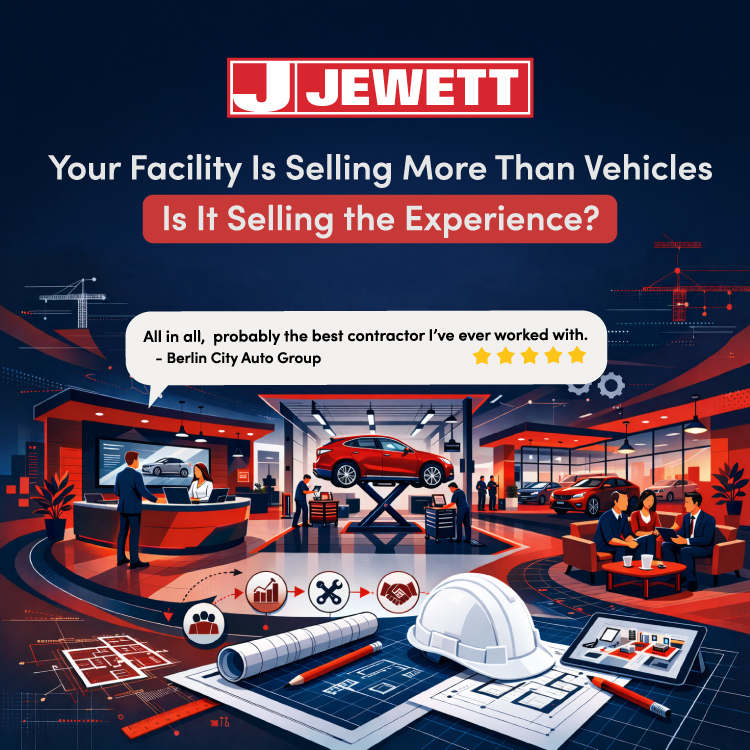
For automotive dealerships, construction doesn’t happen in a vacuum. Sales floors still need to sell, service drives need to move vehicles, and customer experience can’t be put on hold. Every closed bay, blocked driveway, or confusing temporary entrance directly impacts revenue.
As an automotive design-build construction company, we approach phased construction with one primary goal: keep dealerships operational, profitable, and customer-focused while improvements are underway. When phased correctly, construction becomes a strategic investment—not a disruption.
Why Phased Construction Matters in Automotive Facilities
Unlike other commercial environments, dealerships are live, customer-facing businesses. Shutting down or significantly slowing operations during construction can lead to:
- Lost sales opportunities
- Reduced service throughput
- Declining CSI scores
- Long-term customer attrition
Phased construction allows dealerships to upgrade, expand, or modernize while continuing to generate revenue. But success depends entirely on how well those phases are planned and executed.
The Design-Build Advantage in Phased Automotive Projects
Phased construction is not simply dividing a project into parts. It requires tight coordination between design, construction, and dealership operations—something best achieved through design-build delivery.
By integrating all disciplines under one team, design-build allows:
- Early operational planning alongside design
- Real-time cost and schedule feedback
- Proactive sequencing that avoids service or sales shutdowns
- One point of accountability for both construction and continuity
This alignment is essential for zero-disruption outcomes.
Start With Operations, Not Drawings
The most successful phased projects begin with a deep understanding of how the dealership operates today. Before a single phase is defined, we evaluate:
- Sales and service volume patterns
- Peak customer hours
- Technician workflows
- Vehicle circulation and parking needs
- Fixed operations revenue drivers
Construction phases are then built around these realities—not the other way around.
Phase What Generates Revenue First
To maximize dealership revenue, phases must be sequenced strategically. High-impact revenue areas—such as service drives, quick lube bays, and customer-facing spaces—are prioritized to remain operational or be upgraded early.
This approach allows dealerships to:
- Maintain service throughput
- Improve customer experience sooner
- Capture ROI earlier in the project lifecycle
Design-build teams can model multiple sequencing options to determine which phasing strategy best protects cash flow.
Maintaining Safe and Clear Customer Access
Customer perception during construction matters. Confusing access points, poor wayfinding, or safety concerns can undo years of brand-building.
A strong phased construction plan addresses:
- Temporary entrances and exits
- Clear signage and traffic separation
- Safe pedestrian pathways
- Visual barriers that shield construction zones
By managing these elements proactively, dealerships remain welcoming—even mid-construction.
Temporary Systems That Keep the Business Running
One of the most overlooked aspects of phased construction is temporary infrastructure. Power, compressed air, drainage, IT, and EV charging must remain reliable throughout every phase.
Design-build teams plan these systems upfront to ensure:
- No interruption to service operations
- Seamless transitions between phases
- Compliance with safety and code requirements
This planning prevents emergency fixes that cause downtime and inflate costs.
Phased Construction Without Schedule Creep
Without a unified team, phased projects often suffer from delays between stages. Design-build eliminates this risk by maintaining continuous momentum from phase to phase.
Permitting, procurement, and scheduling are coordinated holistically—so each phase transitions smoothly into the next without idle time or rework.
Protecting Revenue Protects the Budget
Revenue loss during construction is often the largest hidden cost in dealership projects. Phased construction, when executed properly, protects both top-line revenue and project budgets by avoiding extended general conditions, temporary closures, and reactive changes.
Design-build provides the control needed to manage cost and schedule simultaneously.
Experience Makes the Difference
Phased construction in active automotive environments requires more than technical skill—it demands industry-specific experience. Understanding how dealerships function allows design-build teams to anticipate challenges, adapt quickly, and maintain trust throughout the project.
Building While Staying Open
Phased construction isn’t about slowing down—it’s about building smarter. When planned around operations and executed by an automotive-focused design-build team, dealerships can modernize, expand, and evolve without sacrificing performance.
The result is a facility that improves revenue both during construction and long after the final phase is complete.

.png)
.png)
.png)